
Start with the load you cannot afford to lose
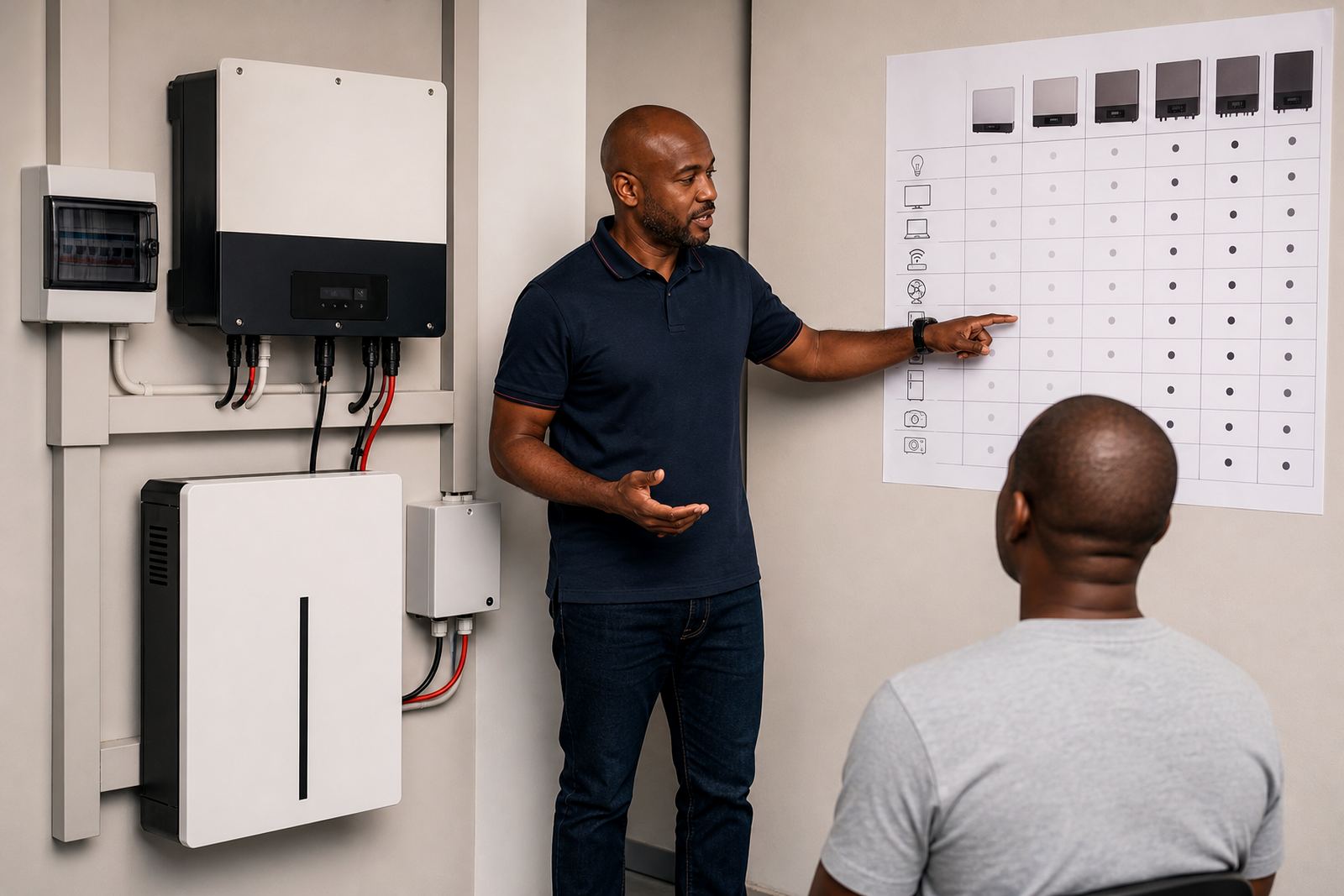
The first step is to separate essential circuits from everything else. In a retail store that usually means tills, card machines, router or internet equipment, office points needed for admin, selected lights, alarm panels and the gate or roller door controls that must keep working during an outage.
Do not size a backup system around the whole building unless you truly need that. A cooler, kettle, aircon and display signs can drain a battery bank fast. For most shops, pharmacies and small commercial spaces, a focused backup plan is better and more cost-effective than trying to support every plug point.
Walk the site during trading hours and note what must stay on, what can switch off and what can wait until power returns. This gives the electrician a proper picture before any installation or system change is planned.
Choose the right retail priority list
Once you know the essential load, rank it in order of importance. Tills and card machines come first because payment flow keeps the store moving. Next are basic lighting, then security and communications, then any back-office equipment that supports trading or stock control.
- Priority 1: tills, card machines and internet equipment
- Priority 2: aisle lighting, entrance lighting and exit signs
- Priority 3: alarm panel, CCTV, access control and gate motor
- Priority 4: office computer, printer and stock systems
If you run a store in a mall or on a busy roadside, security and lighting deserve close attention. A dark shop floor creates risk for staff and customers, and in areas such as Johannesburg, Sandton and Pretoria traders often need enough backup to keep the front of shop visible during evening outages.
Share what must stay on during an outage and the size of the property, and a backup planner will phone or message you.
Contact formHow inverter and lithium battery sizing works in stores
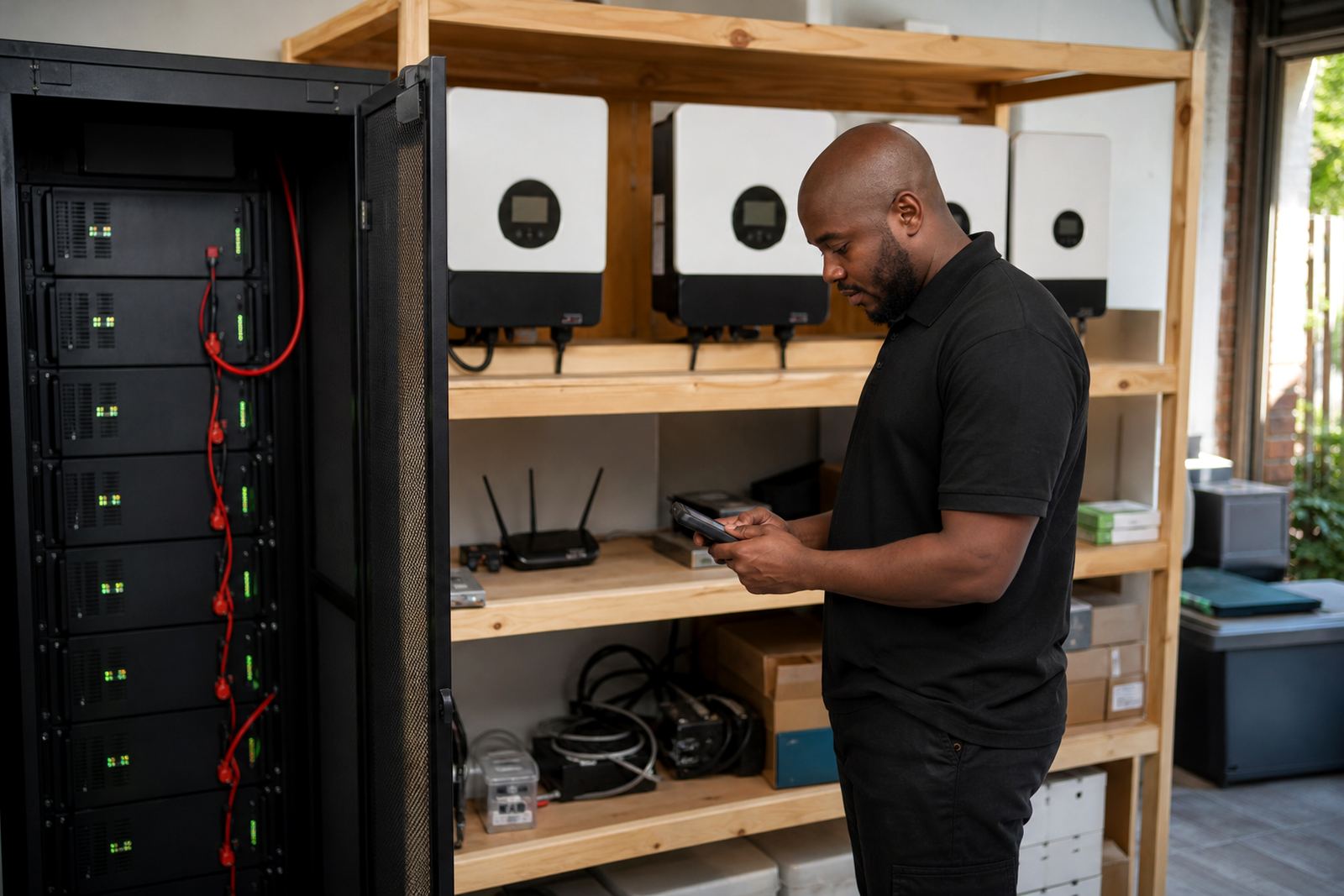
An inverter changes battery power into usable AC power for your selected circuits. Lithium batteries store energy for the outage period and are commonly used in retail because they charge efficiently and handle repeated use well. The correct size depends on the number of essential devices, their starting load and how long you want the backup to last.
For example, a small convenience store may only need enough capacity for a few tills, a router, some lights and security equipment. A larger store in Midrand or Centurion might need a bigger inverter and more battery capacity to carry several payment points and a wider lighting circuit. The aim is not just to get through one short outage but to keep operations practical across a typical load-shedding block.
Backup sizing should always be confirmed on site. Cable routes, breaker capacity, heat build-up and the condition of the existing distribution board all matter. Coastal humidity is less of a concern in Gauteng, but dust, heat and poor ventilation can still affect equipment and battery life.
Plan the changeover so trading does not stop
A retail backup system should change over cleanly when the supply goes off. Depending on the site, this may be a manual changeover, an automatic changeover, or a dedicated backup sub-board with selected circuits separated from the rest of the store. The safer and neater the wiring, the less disruption you will have when load-shedding starts.
Good planning also means telling staff what stays connected and what must remain off. A cleaner should not plug a vacuum into a backed-up socket. A manager should know which breaker feeds the tills. Small mistakes like this can flatten a battery bank faster than expected, or trip the system when the store is busy.
- Label backed-up circuits clearly at the distribution board
- Keep non-essential plugs off the essential circuit
- Test the changeover during a quiet trading period
- Check that signage, lights and payment points recover normally
Compliance matters for every commercial installation
Any inverter or battery installation must be done by a registered electrician. Once the work is complete, a certificate of compliance is required. If the system is grid-tied, it must also be registered with the municipality where required. This is not just paperwork, it is part of making the installation safe and lawful for a business premises.
In shopping centres, office parks and mixed-use buildings, the site rules may also affect where equipment can be mounted and how cables are routed. A proper installation should respect fire exits, ventilation, tenant agreements and any rules set by the body corporate or landlord. If the store is in Randburg, Roodepoort or Fourways, the building manager may want the changeover point and battery location agreed before work starts.
Keep the system ready after installation
Retail backup equipment needs regular checks, especially when load-shedding is frequent. Batteries should be monitored, connections checked and dust removed from vents and cabinets. A store that runs hard every day may need routine servicing, fault checks and battery expansion later if trading needs grow.
Ask staff to report warning lights, unusual heat, fan noise or a battery that no longer lasts through a normal outage. If the system is used for essential lighting and payment equipment, do a scheduled test before the month-end rush or any known high-trading period. A five-minute check can prevent a costly interruption later.
For stores across Gauteng, from Pretoria to Johannesburg and Midrand, a practical maintenance routine keeps the backup plan working when the power goes off without warning. That is especially important when customers are in the shop and the tills still need to ring.